
I almost missed it by eleven days.
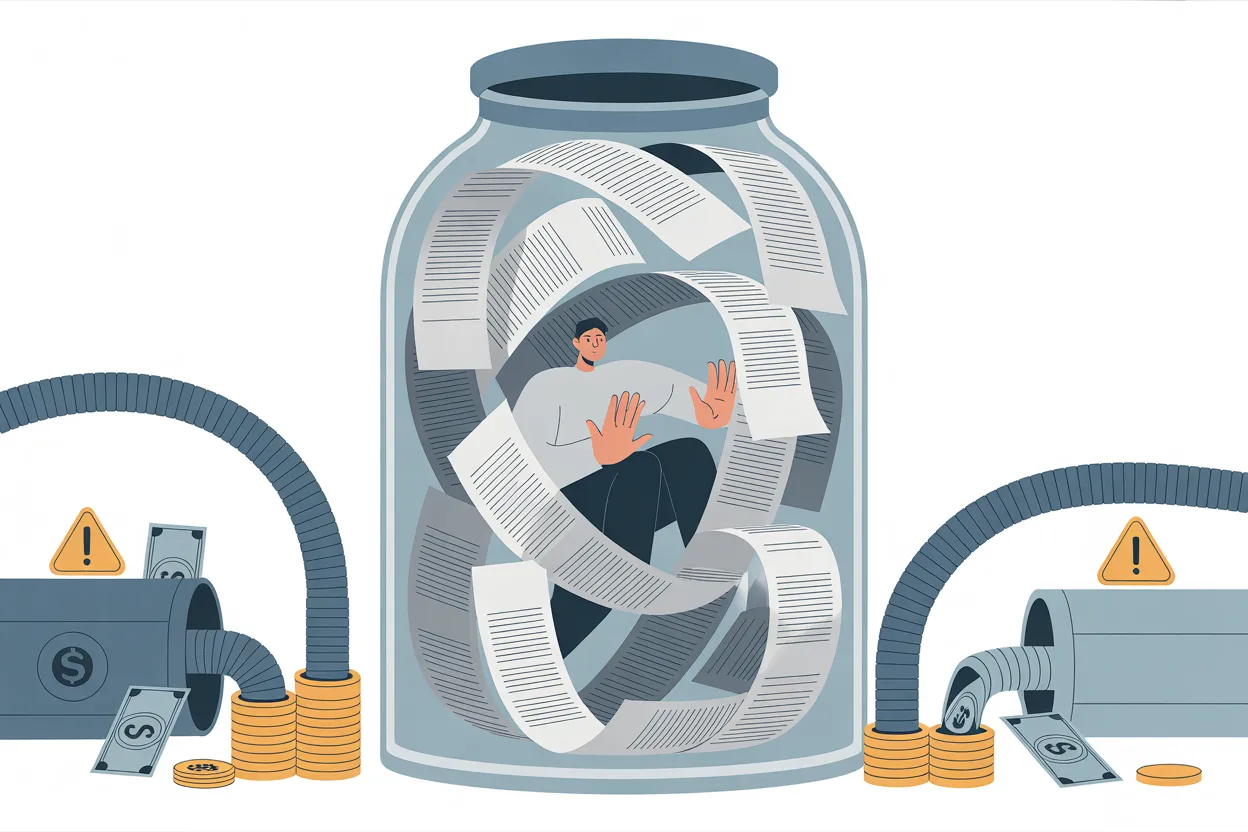
It was a Tuesday afternoon. I was doing my weekly contract check (which I’ll get to in a minute) and I noticed a vendor agreement for a data enrichment service we’d signed two years earlier. The contract had a 12-month auto-renewal clause with a 60-day notice requirement. The renewal date was 71 days away. If I hadn’t caught it that afternoon, we would have been locked into another year at $28,000 for a service we’d stopped using six months prior. Nobody told me. Nobody told anyone. The contract was just sitting there, waiting to quietly renew itself.
I caught it with 11 days of margin. Eleven days between “close call” and “expensive mistake.” I sent the termination notice that evening.
That was the moment I stopped treating auto-renewals as a minor administrative detail and started treating them as the single biggest source of preventable waste in contract management.
The Scale of the Problem
Here’s what makes auto-renewals so dangerous: they’re designed to be easy to forget. That’s the whole point. The vendor gets continuity. The customer gets convenience. And in theory, everyone’s happy.
In practice, roughly 69% of software contracts include auto-renewal clauses with cancellation notice periods between 30 and 90 days. Vertice’s data puts the number even higher, at 89% of SaaS contracts specifically. And across all contract types (not just software), Gartner has found that organizations lose about 25% of their SaaS budgets to unused entitlements and uncontrolled renewals. That’s not a rounding error. That’s a quarter of your software spend going to tools that nobody uses, contracts that nobody reviewed, and renewals that nobody approved.
I’ve worked at four companies. Every single one of them, when I arrived, had at least one contract that had auto-renewed for a service they no longer needed. At one company, it was three contracts totaling over $40,000 a year. At another, I found a telecom contract that had been auto-renewing annually since the office it served was closed. The office had been closed for two years.
The money was just leaving. Every quarter. And nobody noticed because nobody was looking.
Why Smart People Miss Renewals
I want to be clear about something: the people at these companies weren’t careless. They were busy. They were doing their actual jobs, which didn’t include maintaining a mental catalog of every contract expiration date across the organization.
Auto-renewals get missed for a few predictable reasons:
The person who signed the contract left. This is the most common one I’ve seen. Someone negotiates a deal, signs the agreement, and moves on to another company. The contract lives in their email or on a drive somewhere. Nobody inherits the responsibility of watching the dates. The renewal comes and goes.
The contract lives in the wrong place. I wrote last week about inheriting 400 contracts across six shared drives. When your contracts are scattered across departments, email inboxes, and filing cabinets, nobody has a complete picture of what’s renewing when. You can’t manage what you can’t find.
The notice period is longer than you think. Most people assume they’ll deal with a renewal “when it comes up.” But if a contract requires 90 days’ notice for non-renewal, and you notice it 60 days before expiration? You’re already locked in. Some enterprise agreements require 180 days. I’ve seen one that required a full year.
There’s no one person responsible. Sales signed it. Legal reviewed it. Finance pays the invoices. Procurement thinks someone else is tracking the dates. Nobody is tracking the dates.
The common thread is that auto-renewals exploit a gap between signing a contract and managing it afterward. Goldman Sachs estimated that poor contract management can inflate costs by 10 to 30% through payment errors, missed negotiation windows, and uncontrolled renewals. Auto-renewals are one of the most concrete ways that inflation shows up.
The Eleven-Day System
After my close call with that data enrichment contract, I built what I now think of as my renewal system. I’ve refined it over the years and used it at two different companies. It’s not complicated. It’s five things.
1. Find every auto-renewal clause in your portfolio.
This is the boring part, and there’s no shortcut. When I set up my contract repository (I use ContractSafe), one of the first things I did was search every contract for “auto-renew,” “automatic renewal,” “shall automatically renew,” and “will renew.” I also searched for “evergreen,” which is another way some contracts describe perpetual renewals.
I tagged every contract that had an auto-renewal clause. Then I logged three pieces of information for each: the renewal date, the required notice period, and the notice method (email, certified mail, written notice to a specific address). That last one matters more than you think. I once almost blew a cancellation because the contract required written notice to a PO Box in Delaware, and I’d sent an email to my account rep instead. The email wouldn’t have counted.
2. Set alerts at 90, 60, and 30 days.
For every auto-renewing contract, I set up three automated alerts. The 90-day alert is the “start thinking about this” reminder. The 60-day is the “make a decision” reminder. The 30-day is the “if you haven’t acted, act now” reminder.
ContractSafe handles this automatically. But you can do the same thing with calendar reminders, a spreadsheet with conditional formatting, or even a recurring task in whatever project management tool your team uses. The tool is not the point. The alerts are the point.
3. Assign an owner to every contract.
Every auto-renewing contract in my system has a name attached to it. Not a department. Not “legal.” A person. That person gets the alerts. That person is responsible for reviewing the contract before renewal and making a recommendation: renew, renegotiate, or terminate.
This sounds obvious, but it’s the step most organizations skip. When I ask “who owns this contract?” the answer I get most often is a long pause followed by, “I think procurement signed it originally?”
4. Build a renewal calendar.
I maintain a simple view (ContractSafe has this built in, but a spreadsheet works fine) that shows every contract renewing in the next 120 days. I check this every Monday morning. It takes about ten minutes. Those ten minutes are the most valuable ten minutes of my week.
5. Default to reviewing, not renewing.
This is a mindset shift more than a process step. Most organizations treat auto-renewal as the default. The contract renews unless someone objects. I flip that. My default position is that every contract gets reviewed before it renews. The review might take five minutes (“yes, we still need this, the pricing is fair, renew it”), but it happens. No contract renews on autopilot.
The Leverage You’re Giving Away
Here’s the part that took me longer to learn: auto-renewals don’t just cost you money on contracts you don’t want. They cost you money on contracts you do want.
Every renewal is a negotiation opportunity. If you’re happy with a vendor and you want to continue the relationship, that’s great. But the weeks before renewal are the moment when you have the most leverage to renegotiate pricing, add services, adjust terms, or lock in a multi-year rate.
When a contract auto-renews, you lose that window. The vendor keeps you at the same rate (or a higher one, since SaaS vendors frequently build in 5-10% annual increases). You don’t get to right-size your license count based on actual usage. You don’t get to renegotiate the SLA based on the issues you’ve had over the past year.
I saved one company over $80,000 in a single year, not by canceling contracts, but by catching renewals 90 days out and using that window to negotiate. One vendor dropped their rate by 15% just because I called and said, “We’re evaluating alternatives before our renewal.” I wasn’t bluffing, exactly, but I also wasn’t planning to leave. They didn’t know that.
The point is: if you’re not tracking your renewals, you’re not just paying for things you don’t need. You’re overpaying for things you do need.
The Regulatory Shift
One more thing worth mentioning. The legal landscape around auto-renewals is changing fast. The FTC revised its Negative Option Rule in late 2024 to apply stricter disclosure and cancellation requirements to auto-renewing contracts, including B2B transactions. (The Eighth Circuit vacated the rule in July 2025, so the federal picture is still evolving.) Meanwhile, states like California, New York, and Colorado have all passed or amended their own auto-renewal laws with tighter requirements around advance notice, cancellation methods, and explicit consent.
I’m not a lawyer, so I won’t tell you what this means for any specific contract. But the direction is clear: regulators are paying more attention to auto-renewals, and the days of burying a renewal clause on page 34 and hoping nobody notices are numbered. If you’re on the vendor side, this is worth watching. If you’re on the buyer side, it’s one more reason to get your renewal tracking in order now.
Start Today
If you do nothing else after reading this, do one thing: go find your contracts with auto-renewal clauses and check when they renew.
Not tomorrow. Today. Because the one that’s 65 days from renewal right now? That’s the one that’s going to cost you.
I know this because I’ve been that person, staring at a contract on a Tuesday afternoon, doing the math on whether 11 days was enough time to draft a termination notice, get it reviewed, and send it to a PO Box in Delaware.
It was enough. Barely. Don’t make it that close.
I’m Dave, and I write about contract management the way it actually works. No jargon, no sales pitch, just what I’ve learned from 15+ years of doing this job. New posts every Tuesday and Thursday.
Leave a Reply